
Ecommerce SEO for
US Online Stores
The US ecommerce market crossed $1.2 trillion last year, and competition for organic visibility has never been higher. I work with US-based online stores to turn organic search into a revenue channel that compounds month after month, while paid ad costs keep climbing.
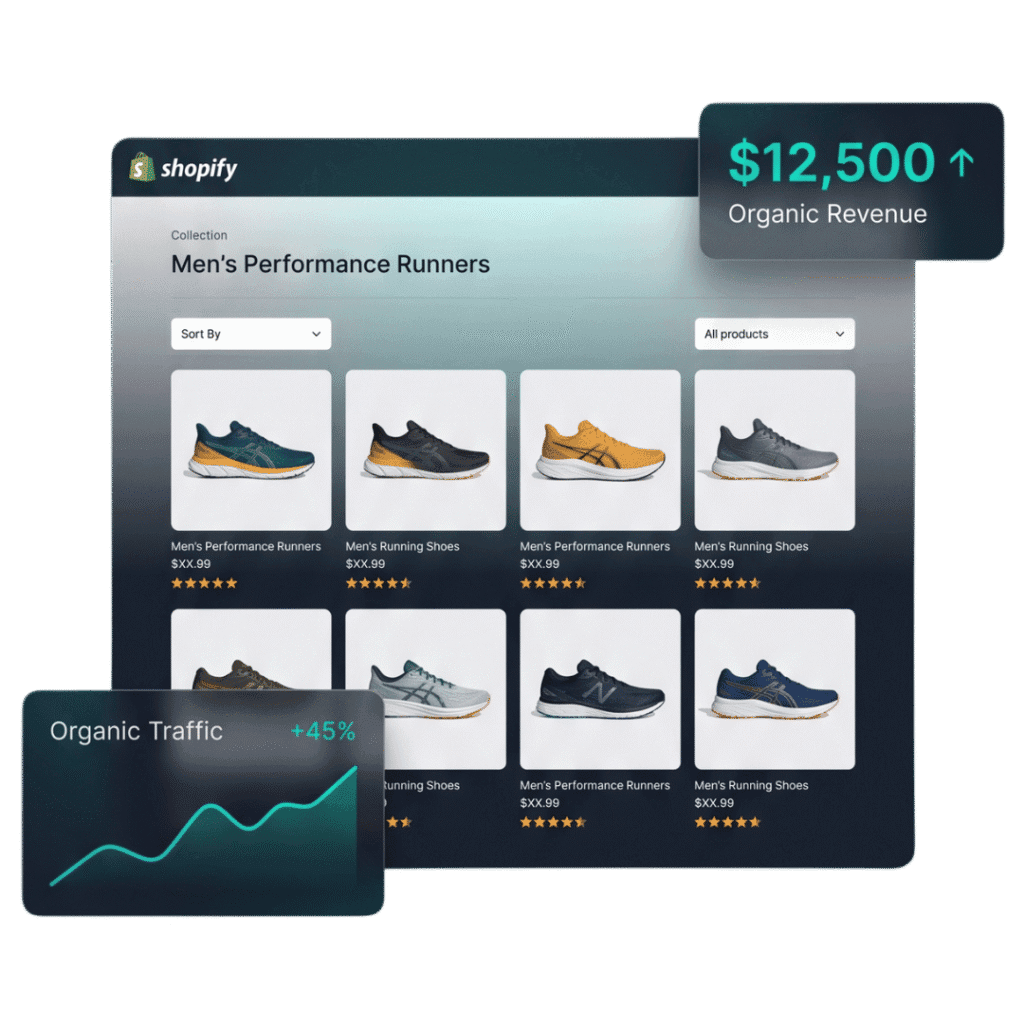
246% organic traffic growth for a US fashion brand.
68% increase in organic revenue for a US health store.
Why organic search matters more than ever for US ecommerce
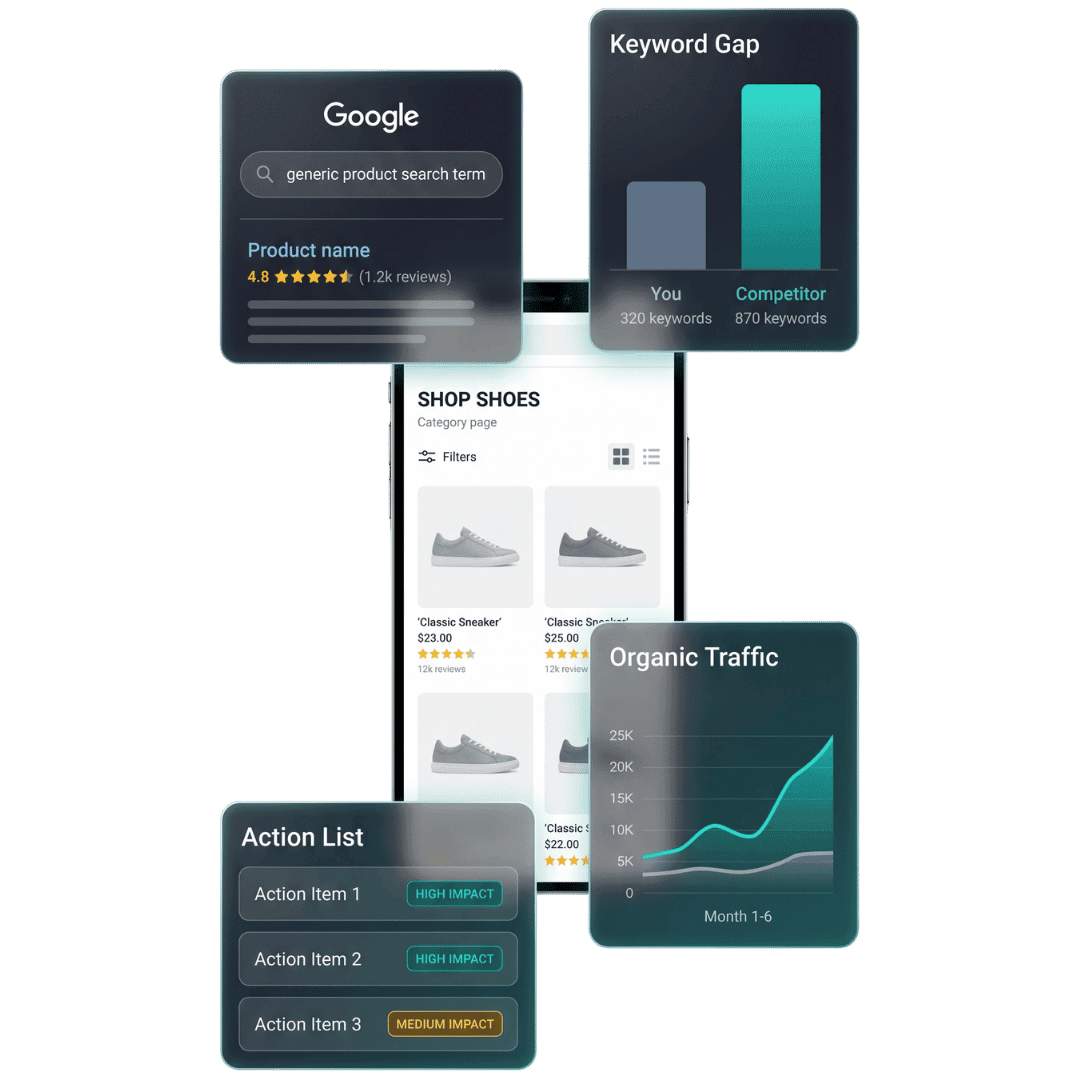
US ecommerce has crossed $1.2 trillion in annual sales, but that growth isn’t split evenly. Amazon alone takes roughly 38% of all US online sales. The rest is fought over by hundreds of thousands of independent stores, most of whom are spending more on paid ads every quarter just to stay visible. Paid ad costs rose for 87% of industries last year, with the average Google Ads CPC hitting $5.26. For ecommerce brands, cost per acquisition went up over 12% while return on ad spend dropped 10%. The math on paid-only growth is getting worse every year.
Organic search still drives around 43% of all ecommerce traffic, making it the single largest channel for online stores. And the cost structure is fundamentally different. Paid stops the moment you stop spending. Organic compounds. The content you publish, the technical fixes you make, and the authority you build keep delivering traffic and revenue months and years after the initial investment. For US stores competing in the most saturated ecommerce market in the world, organic is the channel that actually scales.
Challenges US ecommerce stores face with SEO
Competing against Amazon and marketplace giants
Your products show up in Google, but so do Amazon, Walmart, and Target listings for the same keywords. Marketplace dominance means independent stores need sharper keyword targeting, stronger product page content, and better technical foundations to earn the clicks that marketplaces don’t automatically absorb. A generic SEO approach won’t cut through that level of competition.
Paid ad costs are squeezing your margins
Google Ads CPC increased across nearly every industry last year. Facebook and Instagram aren’t getting cheaper either. If paid media is your primary acquisition channel, your customer acquisition cost is rising while your margins shrink. Organic search is the counterweight: a channel where investment lowers your cost per customer over time instead of raising it. Stores that build it now gain a structural advantage.
You’ve invested in SEO before and didn’t see the return
Maybe it was an agency delivering monthly reports full of keyword rankings but no revenue impact. Maybe a freelancer who made a few meta title changes and called it a strategy. Most SEO providers don’t specialise in ecommerce. Product pages, category structures, faceted navigation, platform-specific constraints: if your SEO provider doesn’t understand these, the results will reflect that.
Ecommerce SEO services for US stores
Ecommerce
SEO Audit
A full audit of your store’s SEO: technical health, keyword positioning, content gaps, backlink profile, competitor analysis, and AI search visibility. Every finding is prioritised by revenue impact and delivered as a clear, actionable plan with defined priorities.
Technical SEO for Ecommerce
Identifying and prioritizing the technical issues affecting how search engines crawl, index, and rank your store. Site speed, structured data, internal linking, crawl budget, and platform-specific fixes, all delivered as a prioritized action plan.
Ecommerce
Content Strategy
A content plan built around the commercial keywords your store should rank for. Product page optimization priorities, category page briefs, blog topics that drive traffic toward your money pages, and a publishing calendar with clear priorities.
Ecommerce
Link Building
Earning backlinks that move the needle for ecommerce sites. Digital PR, product-led outreach, resource link building, and strategic guest placements on relevant sites. Every link is editorially earned. No PBNs, no spam, no link farms.
International
Ecommerce SEO
Expanding your store’s organic presence into new markets. Hreflang implementation, multi-region keyword strategy, localized content, and international site structure that doesn’t cannibalize your primary market.
Every major ecommerce platform.
One SEO approach that works.
Whether your store runs on Shopify, WooCommerce, Magento, or BigCommerce, the SEO fundamentals that drive organic revenue are the same. What changes is the technical implementation. Every platform has its own quirks, limitations, and opportunities, and your SEO strategy needs to account for all of them.


How it works
01
Audit
It starts with an SEO audit of your store. I review your technical setup, keyword positioning, content, backlink profile, and competitive landscape. You get a clear picture of where your organic opportunities are, what’s holding your store back, and what to prioritize first.
02
Strategy
Based on the audit findings, you receive a tailored SEO strategy covering priorities, timelines, and expected outcomes. Every recommendation accounts for your platform, your market position, and the competitive dynamics of US ecommerce.
03
Execution
The strategy gets implemented. I handle the SEO direction: keyword research, content briefs, on-page optimization plans, and ongoing priorities. Every recommendation comes with clear instructions so implementation stays on track.
04
Reporting
Clear monthly reports showing what was done, what changed, and what’s next. Rankings, organic traffic to product and category pages, and revenue from organic search. Everything ties back to the keywords and pages that drive revenue for your store.
Why work with a specialist instead of an agency?
Typical agency
Working with a specialist
Investment
Ecommerce SEO engagements start from $500/month for ongoing retainers.
One-off projects such as audits and migrations are scoped and quoted individually.
Every engagement begins with a free SEO audit, so we both understand exactly what needs to happen before any commitment.
Frequently asked questions
Ready to grow your store’s organic revenue?
Book your free ecommerce SEO audit. You’ll see where your organic opportunities are, what’s holding you back, and what a focused SEO strategy can do for your store’s revenue.
Typically responds within 24 hours.